Earth and Space Sciences Regents, June 2025, question 29
Tap an image to open it full size.
What the figure shows
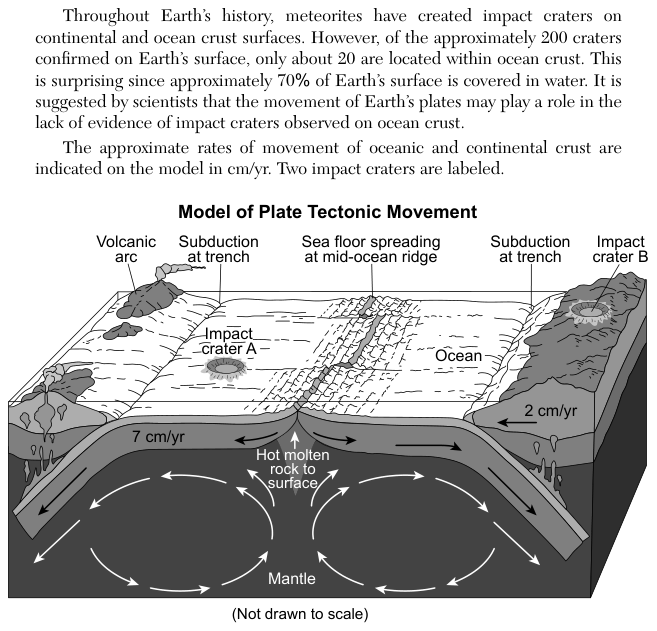
A block model shows sea floor spreading at a mid-ocean ridge in the middle, with ocean crust moving away on both sides toward subduction trenches. On the left side the ocean crust moves at 7 centimeters per year (cm/yr) toward a trench with a volcanic arc. On the right side a plate moves at 2 cm/yr. Impact crater A sits on the ocean floor on the left side, and impact crater B sits on continental crust on the right. Arrows in the mantle show circular convection currents.
How to think about it
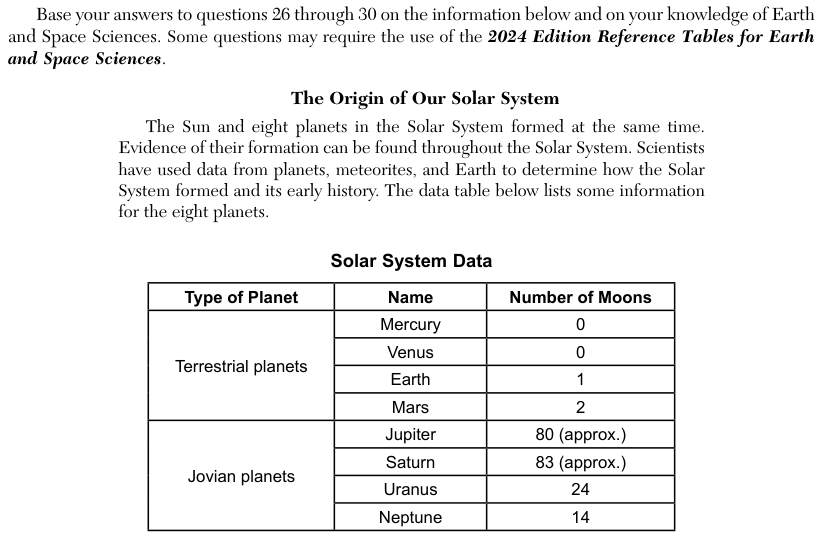
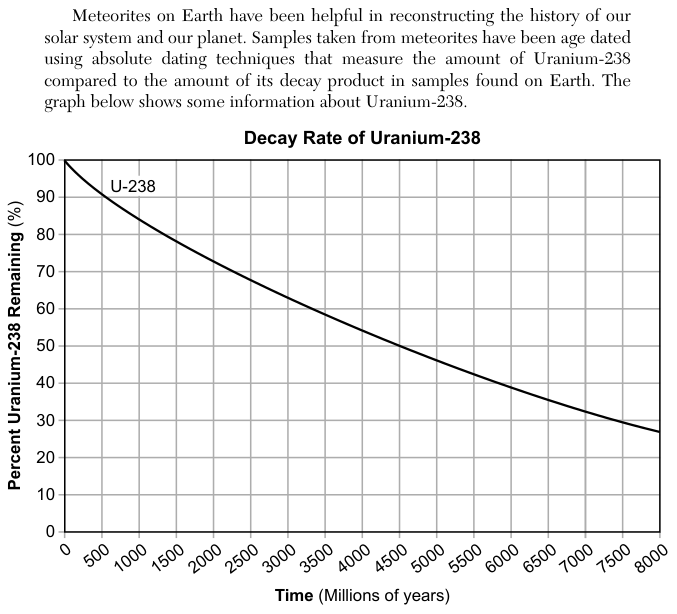
Find which kind of crust each crater sits on and which way that crust is moving. Then ask what happens to ocean crust when it reaches a trench, and compare the two speeds marked on the model.
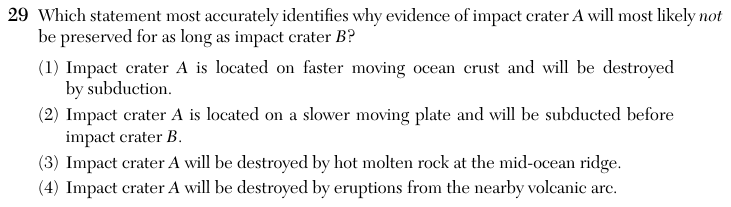
Which statement most accurately identifies why evidence of impact crater A will most likely not be preserved for as long as impact crater B?
Choice 1 is right. Crater A lies on ocean crust that moves at 7 cm/yr (centimeters per year) toward a subduction trench. When the crust reaches the trench it sinks into the mantle and the crater is destroyed. Crater B sits on continental crust, which is too thick and buoyant to sink at a trench in this model, so it is not recycled the way ocean crust is. Its evidence can therefore last much longer. This also explains why so few craters are found on the ocean floor.
The model shows crater A on the plate moving at 7 cm/yr (centimeters per year), which is the faster plate, not the slower one. This choice reverses the two speeds marked on the model.
Hot molten rock rises at the mid-ocean ridge, but the crust carrying crater A moves away from the ridge toward the trench. New crust forms at the ridge; older crust does not return to it.
The volcanic arc forms on the plate above the subduction zone. Crater A is destroyed when its own crust sinks at the trench, not by eruptions on the other side.