Earth and Space Sciences Regents, August 2025, question 37
Tap an image to open it full size.
What the figure shows
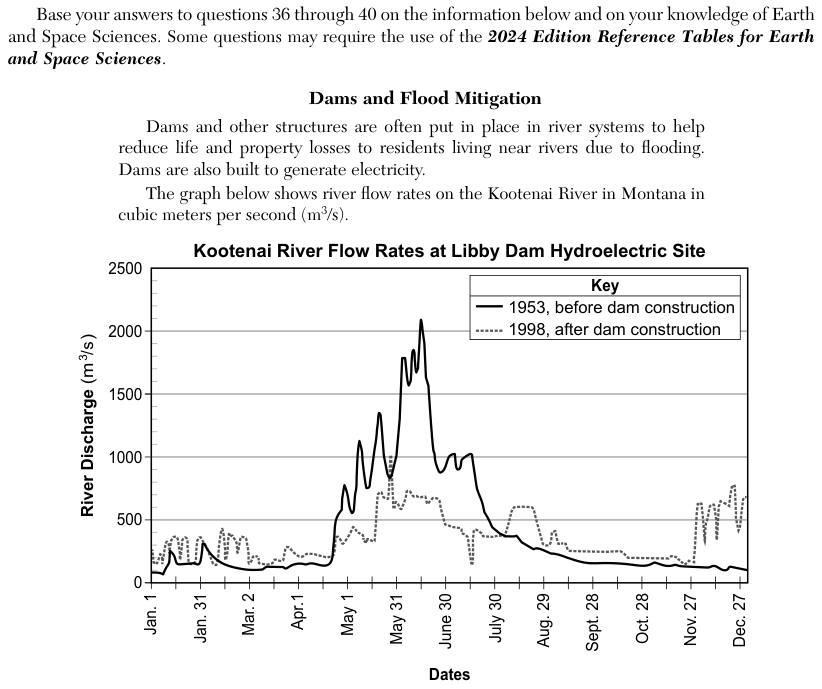
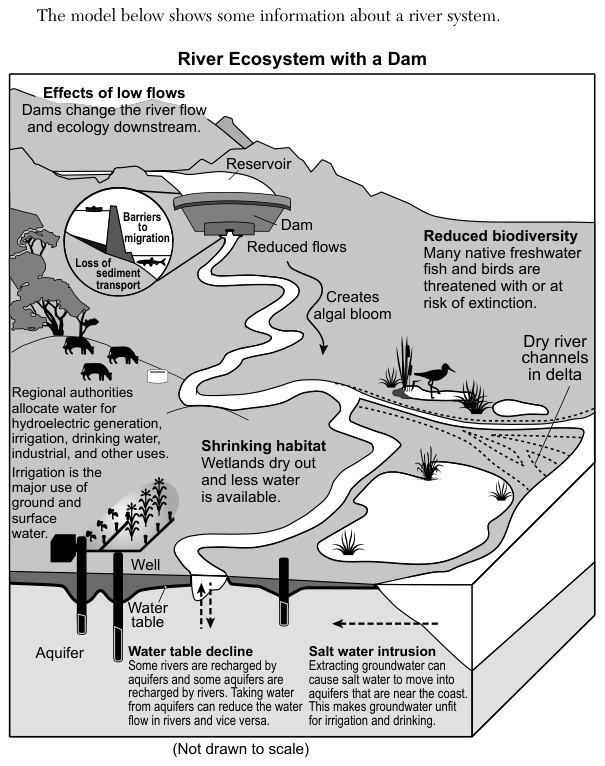
The model River Ecosystem with a Dam shows a reservoir and dam, reduced flows below the dam, and a river running to a delta with dry river channels. Its labels read: Effects of low flows (Dams change the river flow and ecology downstream); Creates algal bloom; Reduced biodiversity (Many native freshwater fish and birds are threatened with or at risk of extinction); Shrinking habitat (Wetlands dry out and less water is available); Water table decline (Some rivers are recharged by aquifers and some aquifers are recharged by rivers. Taking water from aquifers can reduce the water flow in rivers and vice versa); and Salt water intrusion (Extracting groundwater can cause salt water to move into aquifers that are near the coast. This makes groundwater unfit for irrigation and drinking). The passage and graph from the previous question are also part of this set.
How to think about it
The hydrosphere is Earth's water, and the biosphere is all living things. Each choice links a change in water to an effect on living things. Check both halves of each statement against the labels on the model: is the change in water shown, and does the model give the same effect on life?
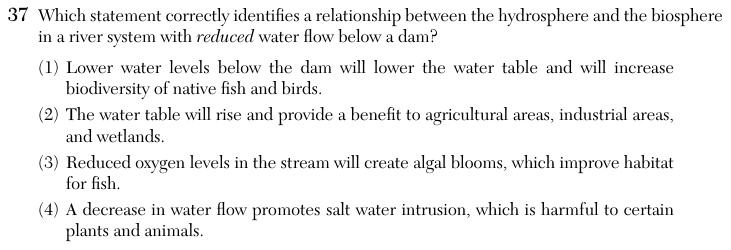
Which statement correctly identifies a relationship between the hydrosphere and the biosphere in a river system with reduced water flow below a dam?
Choice 4 is right. The model says some rivers are recharged by aquifers and some aquifers are recharged by rivers, so a river and its aquifer exchange water depending on local conditions. With less river flow, salt water from the sea can advance up the delta directly, and less fresh water may reach the aquifer. The model's own label names extracting groundwater as a cause of salt water moving into coastal aquifers. This is a change in the hydrosphere that harms living things, such as plants that cannot grow in salty water, and makes the water unfit for irrigation and drinking.
The first half fits the model, which shows the water table falling. The second half does not: the model says biodiversity is reduced and native fish and birds are threatened, not increased.
The model shows the water table declining, not rising, and it shows wetlands drying out. So this choice reverses the change and its effect.
Algal blooms do appear in the model, but the cause and effect are reversed and the result is wrong. Extra nutrients and slow, warm water cause algae to grow. When the algae die and decay, they use up oxygen, and low oxygen harms fish instead of improving their habitat.