Earth and Space Sciences Regents, January 2026, question 9

Tap an image to open it full size.
What the figure shows
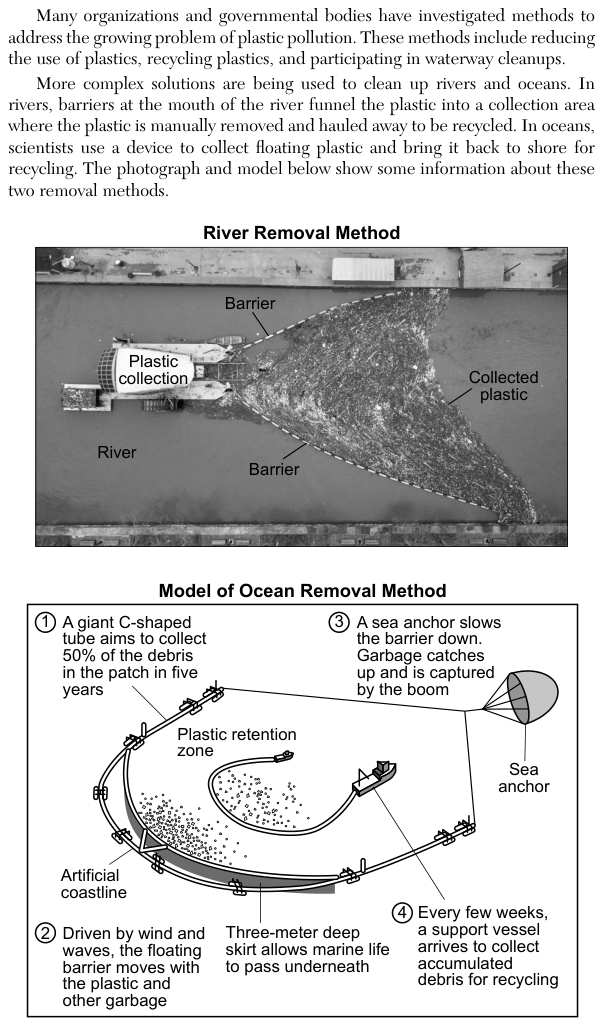
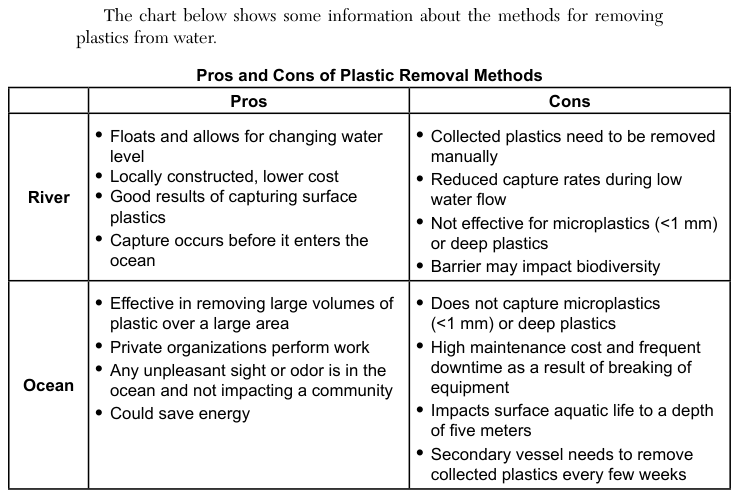
The passage describes two cleanup methods. In rivers, barriers at the river mouth funnel plastic into a collection area where it is removed by hand and taken away for recycling. In oceans, a floating C-shaped barrier driven by wind and waves collects floating plastic; a three-meter-deep skirt lets marine life pass underneath, and a support vessel collects the debris every few weeks. The Pros and Cons chart lists for the river method: pros of floating with changing water level, locally constructed, lower cost, good capture of surface plastics, and capture before plastic enters the ocean; cons of manual removal, reduced capture at low water flow, not effective for microplastics (less than 1 millimeter) or deep plastics, and the barrier may impact biodiversity. For the ocean method: pros of removing large volumes of plastic over a large area, work done by private organizations, any unpleasant sight or odor stays in the ocean, and could save energy; cons of not capturing microplastics (less than 1 millimeter) or deep plastics, high maintenance cost and frequent downtime from breaking equipment, impacts on surface aquatic life to a depth of five meters, and a secondary vessel needed every few weeks.
How to think about it
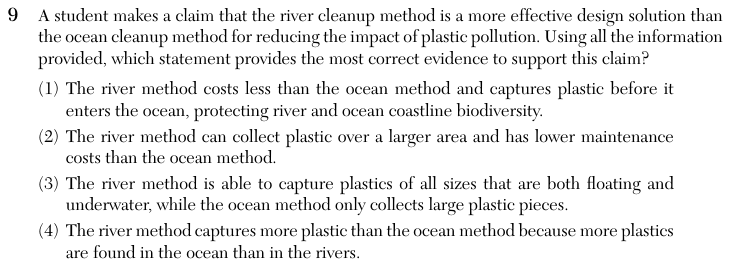
Read each statement as a set of separate claims. Check every claim against the Pros and Cons chart and the descriptions of the two methods. A statement can serve as evidence only if every part of it agrees with the information given and it favors the river method.
A student makes a claim that the river cleanup method is a more effective design solution than the ocean cleanup method for reducing the impact of plastic pollution. Using all the information provided, which statement provides the most correct evidence to support this claim?