Earth and Space Sciences Regents, June 2026, question 13
Tap an image to open it full size.
What the figure shows
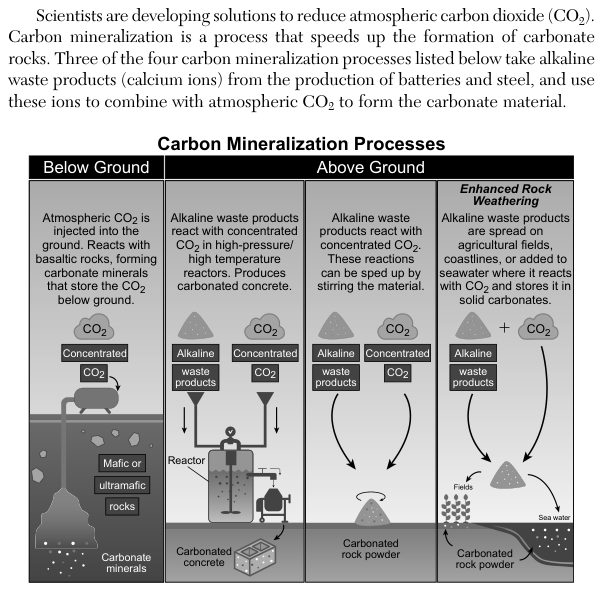
The passage says carbon mineralization speeds up the formation of carbonate rocks, and that three of the four processes use alkaline waste products (calcium ions) from making batteries and steel to combine with atmospheric carbon dioxide (CO2). The Carbon Mineralization Processes diagram has four panels. Below Ground: CO2 is injected into the ground and reacts with basaltic rocks (mafic or ultramafic rocks), forming carbonate minerals that store the CO2. Above Ground, first panel: alkaline waste products react with concentrated CO2 in high-pressure, high-temperature reactors and produce carbonated concrete. Second panel: alkaline waste products react with concentrated CO2, sped up by stirring, to make carbonated rock powder. Enhanced Rock Weathering: alkaline waste products are spread on fields, coastlines, or added to seawater, where they react with CO2 and store it in solid carbonates.
How to think about it
Each claim names a process and says what it does. Match each claim to one panel of the diagram and check every part of it: the materials used, the product made, and the effect on carbon dioxide. A claim that gets any one part wrong does not count.
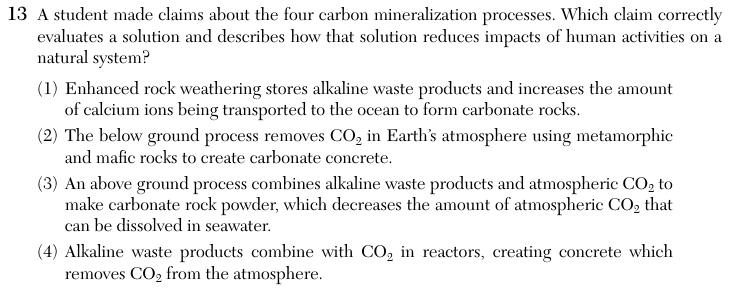
A student made claims about the four carbon mineralization processes. Which claim correctly evaluates a solution and describes how that solution reduces impacts of human activities on a natural system?
Choice 4 is right. The reactor panel shows alkaline waste products reacting with concentrated carbon dioxide to make carbonated concrete. The carbon dioxide reacts to form carbonate minerals in the concrete, so it is kept out of the atmosphere. This reduces the effect of human carbon dioxide release on the climate system.
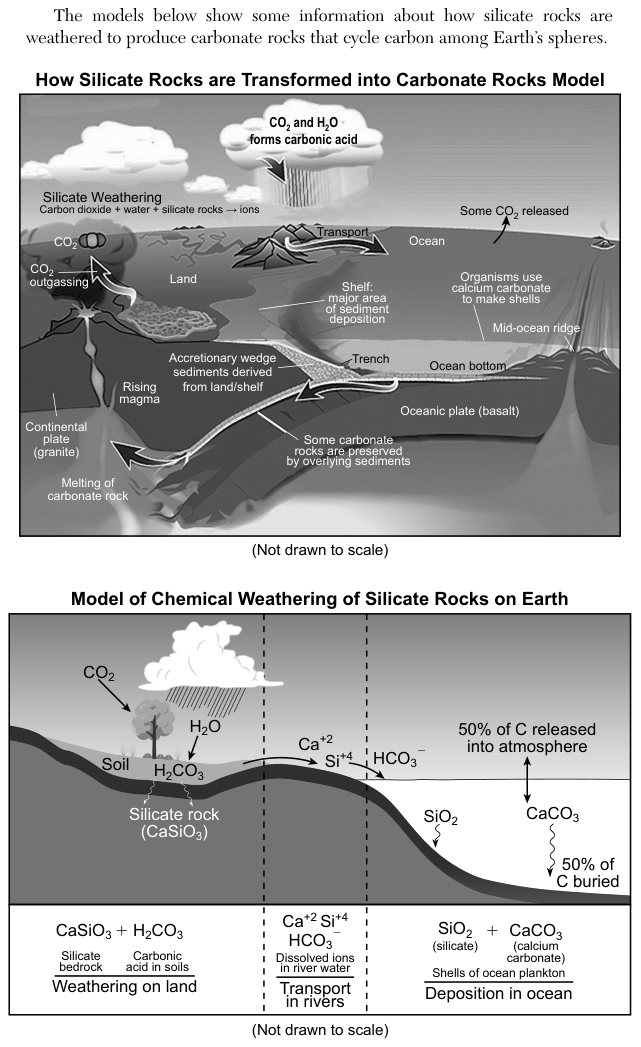
Enhanced rock weathering stores carbon dioxide in solid carbonates; it does not store the alkaline waste products. The panel says the waste reacts with carbon dioxide on fields, coastlines and in seawater, and it says nothing about more calcium ions being carried to the ocean. This choice may come from mixing it up with natural weathering in the earlier models.
The below ground process uses basaltic (mafic or ultramafic) rocks, not metamorphic rocks. It forms carbonate minerals underground, not carbonate concrete, which is made in the above ground reactors. This choice may come from mixing two different panels.
The rock powder panel uses concentrated carbon dioxide and gives no information about seawater. Its benefit is that carbon dioxide is stored in solid rock powder instead of staying in the air. This choice may come from linking the seawater label in the enhanced rock weathering panel to the wrong process.