Earth and Space Sciences Regents, August 2025, question 2
Tap an image to open it full size.
What the figure shows
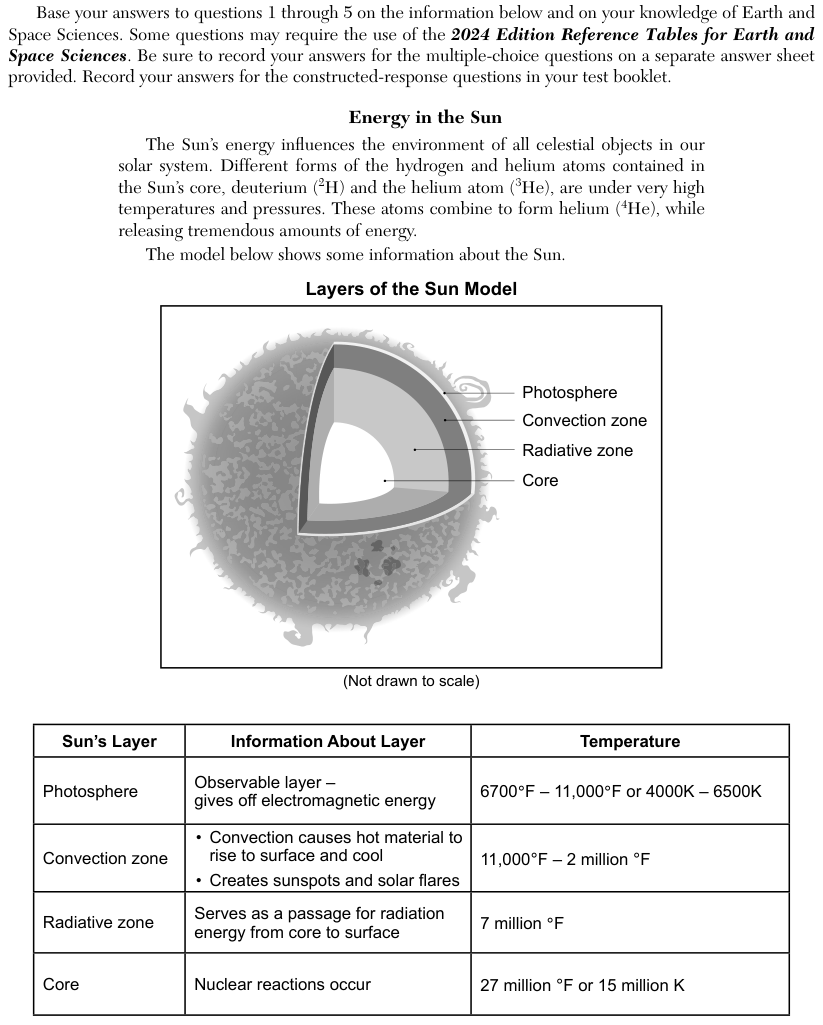
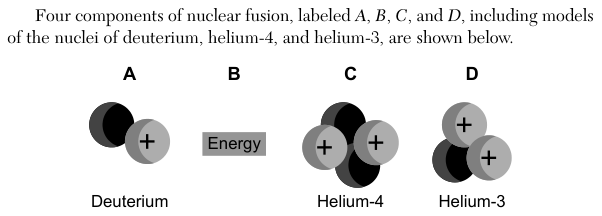
The passage, Energy in the Sun, says that deuterium and helium-3 atoms in the Sun's core combine under very high temperatures and pressures to form helium-4 and release large amounts of energy. The Layers of the Sun Model shows four layers from the center outward: core, radiative zone, convection zone and photosphere. Its table says: core, nuclear reactions occur, 27 million degrees Fahrenheit (°F); radiative zone, serves as a passage for radiation energy from core to surface; convection zone, hot material rises to the surface and cools; photosphere, observable layer that gives off electromagnetic energy.
How to think about it
The question has two parts: where the energy is made, and where it leaves the Sun. Use the Information About Layer column of the table for both. Then check each claim against both parts, not only one.
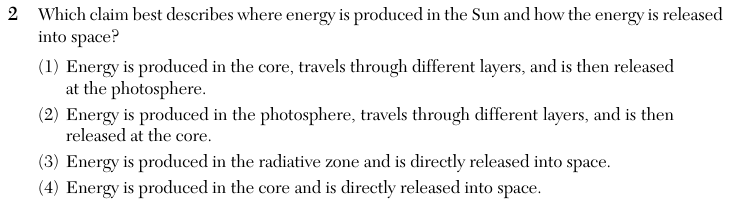
Which claim best describes where energy is produced in the Sun and how the energy is released into space?
Choice 1 is right. The table says nuclear reactions occur in the core, so that is where the energy is produced. The radiative zone is a passage for this energy toward the surface, and the convection zone carries hot material up to the surface. The photosphere is the layer that gives off electromagnetic energy into space.
This choice reverses the path. The photosphere is the outer layer that gives off energy, and the core is where the nuclear reactions occur. It may come from mixing up the innermost and outermost layers on the model.
The table describes the radiative zone as a passage for energy, not a place where nuclear reactions occur. Energy from it also passes through the convection zone and the photosphere before it leaves the Sun. This choice may come from reading the word radiation in the layer's name as the place where the energy starts.
The core is the right place for energy production, but the energy does not leave from the core. It moves out through the radiative zone and the convection zone and is given off at the photosphere. This choice skips the layers shown in the model.