Earth and Space Sciences Regents, January 2026, question 23
Tap an image to open it full size.
What the figure shows
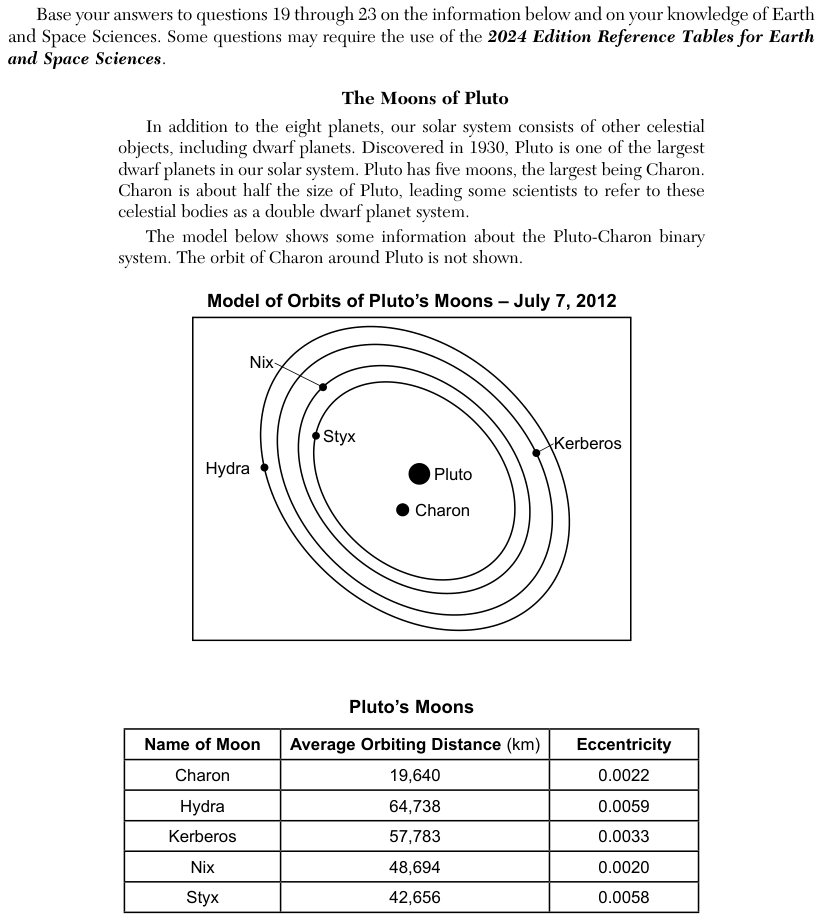
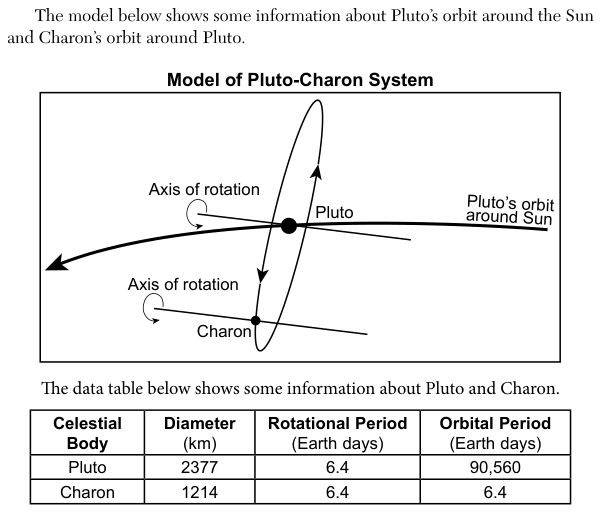
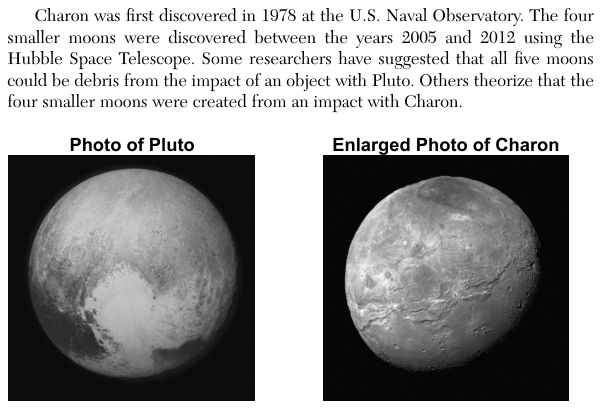
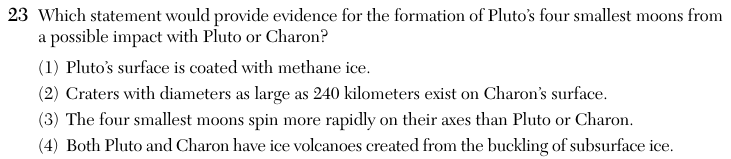
The passage says Charon was discovered in 1978 and the four smaller moons between 2005 and 2012. It says some researchers suggest all five moons could be debris from an object striking Pluto, and others think the four smaller moons formed from an impact with Charon. A photo of Pluto and an enlarged photo of Charon show their surfaces; Charon's surface has rough areas, long cracks and round marks.
How to think about it
Read the claim in the passage: the small moons formed from material thrown out when an object struck Pluto or Charon. For each statement, ask whether it tells you anything about a past collision, or about something else.
Which statement would provide evidence for the formation of Pluto’s four smallest moons from a possible impact with Pluto or Charon?
Choice 2 is right. A crater forms when an object strikes a surface. Craters as wide as 240 kilometers show that Charon has been hit by large objects. Large impacts like these could throw material into space, and that material could gather into small moons.
Methane ice on Pluto tells us what the surface is made of. It gives no record of a collision, so it does not support an impact origin for the small moons.
A fast spin can have several causes and does not record a collision with Pluto or Charon. This choice may come from linking a difference between the moons to their origin without evidence of an impact.
Ice volcanoes form from processes inside Pluto and Charon, not from objects striking them. This choice may come from confusing surface features made from within with features made by impacts.