Earth and Space Sciences Regents, June 2026, question 36
Tap an image to open it full size.
What the figure shows
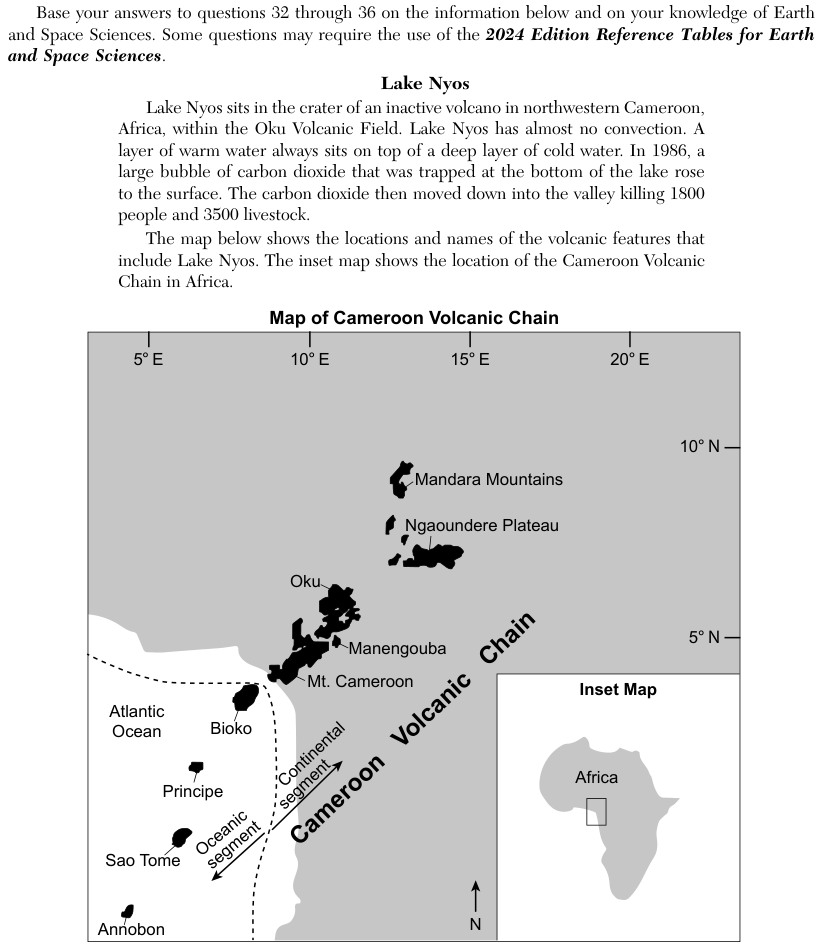
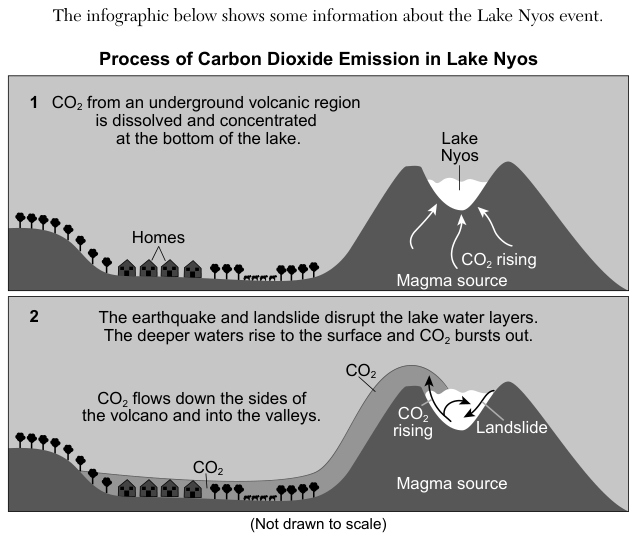
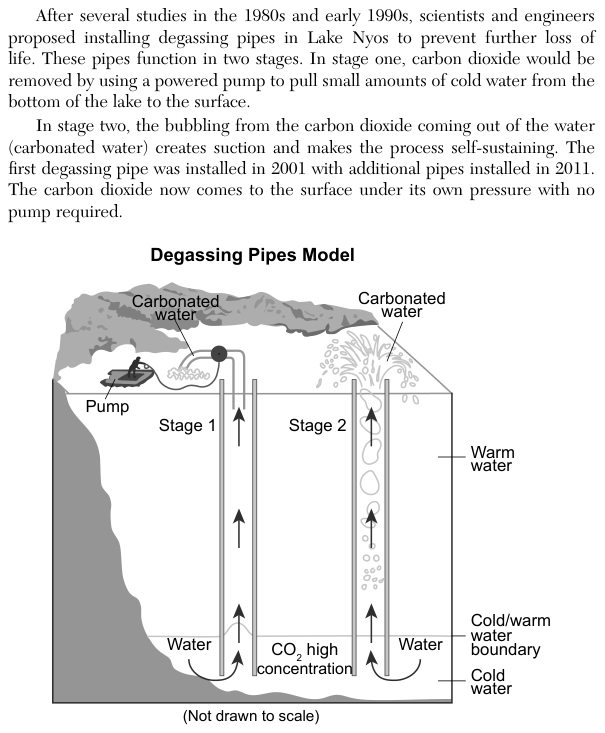
The passage says that after studies in the 1980s and early 1990s, scientists and engineers proposed degassing pipes in Lake Nyos to prevent further loss of life. In stage one, a powered pump pulls small amounts of cold water from the bottom of the lake to the surface. In stage two, the bubbling of carbon dioxide coming out of the water creates suction and makes the process self-sustaining; the first pipe was installed in 2001 and more in 2011, and the carbon dioxide now comes to the surface under its own pressure with no pump required. The Degassing Pipes Model shows two pipes reaching from the surface down past the cold/warm water boundary into the cold water, where the carbon dioxide (CO2) concentration is high. In stage 1 a pump on a boat at the surface draws water up the pipe; in stage 2 bubbles rise in the pipe and carbonated water sprays out at the top. Earlier parts of the passage say Lake Nyos is in northwestern Cameroon and that its CO2 comes from magma below the lake.
How to think about it
Read the stem: it asks why the self-sustaining kind of pipe is the best choice. Find in the passage what the word self-sustaining refers to. Then check each statement against the Degassing Pipes Model to see whether the pipes really do what the statement claims.
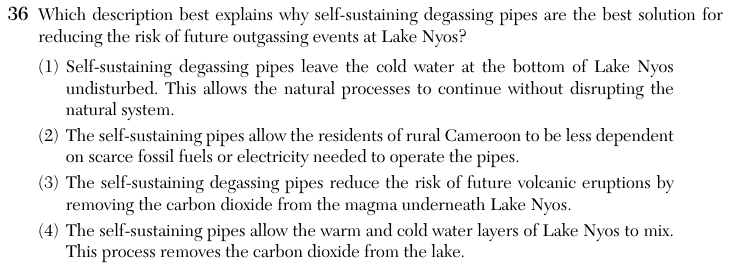
Which description best explains why self-sustaining degassing pipes are the best solution for reducing the risk of future outgassing events at Lake Nyos?
Choice 2 is right. The passage says that in stage two the carbon dioxide comes to the surface under its own pressure, with no pump required. Pipes that keep working without a pump need no fuel or electricity to run, so they can keep removing the gas over the long term. Choice 2 presents this as an advantage for residents of rural Cameroon, where it describes fuel and electricity as scarce.
The pipes do not leave the bottom water undisturbed. The model shows them drawing cold water rich in carbon dioxide up from the bottom of the lake to the surface.
The pipes remove carbon dioxide from the lake water, not from the magma under the lake. They do not change the risk of a volcanic eruption. This choice may come from mixing up the source of the gas with what the pipes act on.
The model shows the warm and cold layers still in place, with water moving only inside the pipes. This choice also does not say what makes the pipes self-sustaining, which is what the question asks about.